
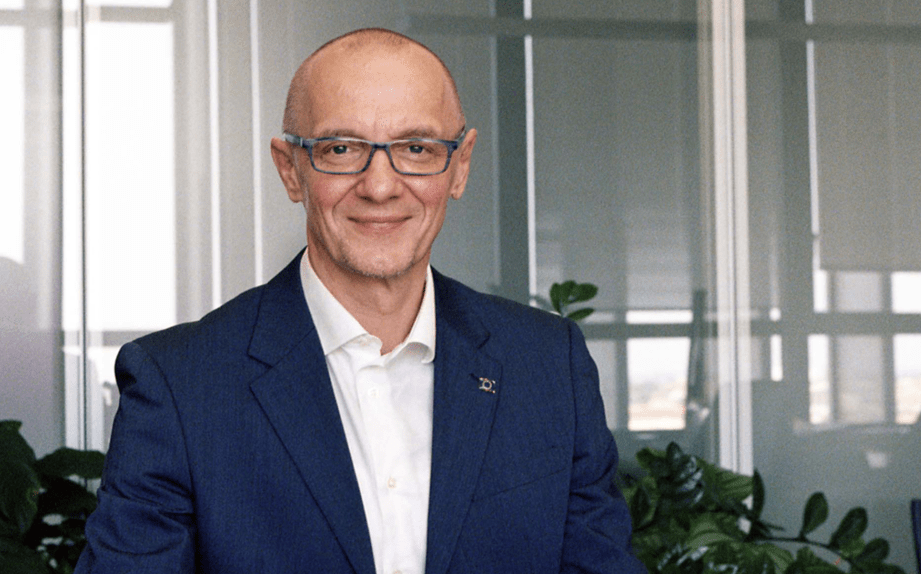
By Bernhard Url, Guido Bellenghi, Alessandro Cuomo, Luca Knuth, and Ellen Vos.
For the EU Agencies Corner of REALaw, we sit down with Bernhard Url to reflect on the past, present, and future of the European Food and Safety Authority (EFSA), drawing on his insights from over a decade as its Executive Director.
Set up through the General Food Law in 2002, EFSA is the EU’s watchdog for food safety. The Authority has mainly an advisory role: it produces scientific opinions and risk assessments to support the European Commission’s regulatory decision-making on food-related risks. After joining EFSA in June 2012 as head of the Risk Assessment Department, Url was appointed as its Executive Director in 2014. His mandate was extended in 2019 by five more years. From June 2024 to September 2025, he was appointed as Acting Executive Director.
We meet with Url in June 2025, just a few weeks before the end of his term as Acting Executive Director in August. Our conversation is structured around three main themes: the EFSA’s past challenges, the current developments relevant for its activities, and reflections on its future. Thanks to Url’s characteristic outspokenness, we cover a wide range of issues, both specific to the Authority and transversal to all EU agencies.
“EFSA is now a more trusted brand”
We start our conversation inviting Url to reflect on his two terms as EFSA’s Director. First, we ask him about what came as a surprising development to him. He briefly points to the COVID pandemic, to then turn to artificial intelligence.
“What to most of us came as a surprise was the huge impact of AI, that appeared publicly around 2022 with open AI. Long in the making but under the carpet, we started with machine learning experimentation in 2014. But we didn’t foresee the power of the large language models.”
Asked about his biggest achievements, Url mentions collaboration with the Member States and transparency. “Collaboration was one of my main drivers here”. “I was pushing it to the max”, he emphasises, immediately adding: “and still not good enough.” Regarding transparency, he stresses:
“OpenEFSA is something I am proud of. EFSA is now a more trusted brand. I think the brand of EFSA, when I came here in 2012, was under scrutiny. We had allegations of conflicts of interests, revolving doors, GMOs, pesticides, artificial sweeteners – EFSA was not trusted enough. And now EFSA is quite – of course, I am biased here – a healthy brand where people say: ‘well, maybe we can trust these guys in Parma.’”
When asked what he might have done differently in hindsight, he adds:
“The alignment between Member States organisations and EFSA is still not where it should be. We could have done more there.”
He also points to external cooperation with African authorities:
“We should have done more with Africa. We still neglect that continent, even in food safety matters, and we will most likely regret this later. Predictions are that there will be four billion people in Africa at the end of this century. If we do trade, we also trade hazards. And it will be good if our trade partners have the same level of food safety as we have. In food safety, we are not doing enough. But we don’t have the resources as EFSA.”
“When scientific evidence intersects with societal values, tensions inevitably arise”
We then turn to EFSA’s present challenges. While Url flagged sustainability as the crucial issue for the future, the political priorities in the EU seem to have changed in recent years. Asked about the Authority’s remaining leeway to support sustainability in the agri-food sector, he points to the limitations of its mandate:
“Our role is limited. Our founding Regulation says that we must work via mandates. We reply to questions from the risk managers: if the risk managers change their political North Pole, they will ask us different questions and, then, sustainability can be more in or more out. We touch environmental sustainability in the fields of pesticides, GMOs, feed additives, recycling processes, and partly contaminations. When it is about safety and preservation of biodiversity, we have – so to speak – a foot in the door of sustainability.
But the big question of sustainability – how food is produced, how we tackle food waste, how we balance diets that are produced in sustainable agri-food systems – is far outside EFSA’s remit.”
Url also addresses the controversial glyphosate file:
“After the first – as I would call it – ‘Glyphosate disaster’ in 2015/16, I proposed to adopt a more holistic approach: to consider what would happen if herbicides were not used in European agriculture, what the effects would be on farmers’ income, biodiversity, competitiveness, food prices, groundwater contamination – not simple, but there are models available for that. At the time, the idea was well received – everyone agreed it made sense. However, after the reapproval, the momentum faded, and things largely returned to business as usual.”
He concludes:
“Changing the practices of producing food in Europe is outside EFSA’s remit. It is a minefield obviously, because it is immediately an economic question: who has the risk, who has the benefit, who pays?
What we do now in our agri-food systems is not sustainable, and we know it. The diagnosis is clear: we are exploiting and polluting the planet and ruining biodiversity. The biggest question that society must answer is how to nurture 9.8 billion people in 2050 while staying within the planetary boundaries.”
Despite having faced considerable criticism in relation to the glyphosate (re)authorisation, Url rejects the idea that political pressure may influence EFSA’s day-to-day work:
“I think political controversies, however intense, do not influence EFSA’s day-to-day work. The Authority was born out of the BSE crisis and was deliberately designed to be as insulated as possible from political interference. That crisis taught us a crucial lesson: suppressing scientific knowledge out of concern for trade impact is not a smart strategy. From what I see, EFSA continues to operate without political pressure on its scientific work.”
Rather than political pressure, Url sees actual impact on the Authority’s work from the EU Court of Justice’s rulings:
“Litigation of course does have an impact on EFSA. Especially before the Transparency Regulation, when we didn’t know how far we should go with the public access to documents requests. There, Court cases gave us guidance and that has an impact. Rightly so: it’s the Court!”
While Url does not see any immediate threats to EFSA’s independence, the current crackdown on regulatory science institutions in the U.S. rings some alarm bells. When asked about the impact of recent developments under the Trump administration on EFSA’s cooperation with US authorities, Url describes a period of disengagement:
“The databases of our American colleagues are down and they are not coming anymore to meetings or conferences. This does have an impact on EFSA, and not a good one.”
He points to the U.S. Food and Drug Administration’s Brussels office as being an exception so far and to the need to build relationships on a personal level. In contrast to the strained ties with U.S. authorities, Url describes EFSA’s cooperation with countries in the EU pre-accession process as comparatively more constructive. Aiming at bringing risk assessment in these countries on par with the EU’s standards, he characterises these cooperations as “very rewarding work” and “trust-building.”
Returning to EFSA’s autonomy and independence, Url recalls the pressure he faced during the first glyphosate renewal when asked whether he ever felt his position under threat.
“When EFSA’s assessment of glyphosate differed from IARC’s, it raised questions in the public and among some policymakers — including in the Berlaymont — about whether EFSA had made the right call. A few Members of the European Parliament were particularly vocal in their criticism, including of my leadership.
But this reflects a broader challenge: when scientific evidence intersects with societal values, tensions inevitably arise. In the European Parliament, for instance, the discussion often shifts from evidence to values — which is entirely legitimate in a democratic process.
At EFSA, our mandate is clear: we assess safety. Whether glyphosate is good or bad for European agriculture is a value-based question. But whether it poses a health risk is a scientific one — and that’s where our role lies.”
Pressure on EFSA does not come solely from EU institutions. NGOs also play a significant role, whether through public debates or strategic litigation. The relationship between EFSA and environmental NGOs has not always been smooth, and Url himself has publicly criticised certain organisations. We therefore ask him how he views their role: does he see NGOs as contributing to an erosion of trust in regulatory science, or can they play a more productive part?
“In principle, NGOs play an essential role in balancing perspectives, particularly by providing a counterweight to industry viewpoints. I don’t believe they are responsible for eroding trust in public institutions. However, their communication strategies can sometimes become polarising — likely influenced by the need to mobilise support and funding. At times, this has led to messaging that we consider disproportionate or unhelpful. For instance, after the glyphosate debate, EFSA faced allegations not just of poor judgment, but of corruption. Legal actions were taken against us in Berlin, Vienna, and Paris — which, in my view, moved beyond constructive criticism.
Still, we maintain a dialogue with NGOs and often find it productive. What I’ve sometimes criticised is what we refer to as ‘cherry-picking’: selective trust in the system. For example, EFSA is praised for its work on animal welfare, but when the same rigorous methods are applied to topics like GMOs, some of the same stakeholders question our credibility. That inconsistency, while perhaps politically effective in the short term, risks undermining long-term trust in public institutions.”
Expanding on the theme of public trust, we ask Url whether he thinks social media developments have an impact on regulatory science. As “truth is now negotiated on social media”, he sarcastically notes, “it is no longer important whether EFSA says something or my aunt Mary says something.” He then explains EFSA’s role on social media.
“In our founding Regulation, we have an obligation to communicate risks, also to consumers and to the public at large. This is extremely difficult, since the EU has 24 languages, 27 countries, and many different cultural contexts – unless you have unlimited means for communication, which we don’t have. Machine translation has helped us recently to communicate in all EU languages, and to have more outreach to the public. The money from the Transparency Regulation allowed us to do Europe-wide campaigns – ‘Safe2Eat’, ‘Stop African Swine Fever’, or Plant Health for Life campaigns –, together with the Member States.
But communicating on social media requires care. We never went to Facebook, because we don’t find our main target audiences there, and we stepped back from X six months ago because we felt our presence there no longer aligned with our values of trust and transparency. We communicate through Bluesky, and a lot on LinkedIn. And there we see good engagement and value.”
While he cites statistical indicators suggesting that the European population holds academic science in high regard, he doubts that this also applies to regulatory science:
“I don’t really believe this story. I think that if you ask the right question on [EU] agencies’ regulatory people, it might be that the positive rate would be lower.”
“In the future, AI will completely upend our risk assessment business”
As Url already mentioned the disruptive role of AI at the beginning of our conversation, we ask him about EFSA’s current use of the technology. He portrays the Authority as a frontrunner in the field:
“I think we are one of the leading agencies when it comes to involving AI in risk governance. Many people talk about data readiness for AI – important. But we also talk about the readiness of people for AI. We invest a lot of money in digital training and dexterity of our people.
Currently, we use AI mainly to increase personal efficiency. We’ve also used it for a few years more in our core business, to partly replace experts in doing systematic literature reviews.”
In Url’s view, using AI promises a radical transformation, but poses risks for both regulatory science and society at large:
“In the future, AI will completely upend our risk assessment business. What we do is basically predictions: for instance, we look at a chemical and a microorganism and, after having looked at the evidence, we predict – how will this chemical behave in the real world? AI does predictions too, so it is a similar model. If AI develops toward reasoning models, it will absolutely change the way we do risk assessment. This will also change the profile of the people we need at EFSA: people that are data ready, that can oversee the algorithms, and that can make sense of the outcome.
For science, AI is a big opportunity. But there are many risks – in terms of democracy, influencing people, and privacy. It will become a nightmare. And we see already how it influences elections in many countries. In Europe, trust in science is still sort of okay. But the social media combined with AI are the best way to destroy all that.”
As to the possibilities to prevent such destruction, he adds:
“There are people who say you cannot prevent fake news: you only can dilute them with accurate news and the more dilution there is, the better. So, we – scientific organisations and agencies – should team up and speak up to dilute fake news with facts. Is this a good strategy? I don’t know.”
To build trust, transparent communication is essential. EFSA has changed its communication policy from transparency towards engagement. In this respect, Url notes some successes – and some limitations:
“A few years ago, we changed our approach to stakeholder engagement, broadening our footprint in the Member States to raise public awareness on food safety and on the science behind it. It works well. The stakeholders ask us: do more. But this raises the fundamental question on the validity of the information we get from them in relation to our scientific processes. And we often have to say ‘very interesting, but it’s a risk management, not a risk assessment issue.’
There, we come to the limits of engagement. The stakeholders could be a bit disappointed and say ‘look, we do all this effort to contribute to your work and then you say it’s not valuable.’ Overall, our relationship in terms of stakeholder engagement is good, but it could be improved: we can do more topical roundtables or discussion groups, which work well.”
“The conflict between excellence and timeliness in risk assessment is the most difficult question EFSA has to face”
Url reiterates that he is confident that EFSA’s independence is not undermined by the pressure coming from EU institutions, stakeholders, NGOs, and geopolitical and technological developments. However, he highlights another vital challenge: the availability of expertise.
“Our autonomy is fine and our budget is okay. What we lack is human resources: we don’t have enough brains to go through the evidence. And this is true for our staff as well as Member States’ experts. Due to our stringent rules about conflicts of interests, we exclude an enormous amount of expertise in Europe. If experts have worked with industry, done consultancy, or received too much research money from industry – we exclude them.
For example, for Bisphenol A we had to deal with 30,000 publications. Our idea was: ‘we have money: can we transform 10 million euros into 100 people that we don’t hire, but who work for us in the Member States and through partnerships? Long term, same values, same strategic interest, maybe even co-financing. Taking the risks together, taking the benefits together.’ But that turned out to be much more difficult than we and the legislators thought.
The lack of human capacity is particularly evident in the field of pesticides, where not even Member States have the resources they should have. This is surprising, as pesticides are a top political issue. The first glyphosate file was on the tables of Mr. Macron, Ms. Merkel, and Mr. Juncker. I mean, if Macron, Merkel, and Juncker talked about a herbicide, then something must be wrong! But, when it comes to resources, nothing happens. We get reports from the Member States so late, sometimes with such low quality, because they don’t have the resources. There is a gap, a dichotomy between the public’s interest and outrage about pesticides and the very low level of available resources.”
As regards advisory timeliness, EFSA has faced criticism for not being fast enough in providing its opinions. For Url, this conflict between excellence and timeliness in risk assessment is “the most difficult question EFSA has to face for the time to come”. He identifies a plurality of reasons for this:
“We get more and more desire and tasks from the society and from the policymakers to look at more and more criteria for human and environmental health. Society wants to be more protected, so we look at more and more areas: endocrine disruption, nanomaterials, combined exposure, Morbus Parkinson and immunotoxicity. That is the message we get from the Parliament, from the NGOs: ‘do more for human health!’ And the tsunami for environmental health is only approaching…
Analysing an increasing volume of scientific literature with the same number of staff inevitably slows us down — it’s a simple matter of capacity. Some of our scientific opinions have taken up to five years to complete, by which time they risk being outdated.
Now, with President von der Leyen’s call for a ‘competitive, innovative Europe’ and for cutting red tape to enable faster market access for food innovations, the expectations are clear and understandable. However, expanding the scope, depth, and speed of risk assessments without a corresponding increase in resources is simply not feasible.”
“We don’t find partners to dance this tango with us”
In the absence of new resources, Url first identifies two alternative solutions to improve EFSA’s advisory timeliness: AI and relying more on Member States’ resources by “going back to the European ecosystem of risk assessment”:
“We have to use the Member States’ resources in a different way, and this needs a political agreement of Member States’ governments, which is not there.
When we outsource work to Member State organisations, we divide it in two different categories. One is supporting our core business, risk assessment. We call this ‘business as usual’. And the other one is ‘development work’. Development work means new methodologies, new data collections, new algorithms, whatever.
The collaboration with Member States works well when it comes to development work, because then we have interested universities and research institutes. The difficulty is with the real risk assessment work, for example assessing enzymes or food additives, because there, universities say: ‘why should we do food enzymes?’
So, we are left with sister agencies in the Member States, that have a similar set up as EFSA. There are not many of them, but some of them are big – some much bigger than EFSA. Cooperation, however, happens on a voluntary basis. Even though we have money, it’s complicated and it’s slow. We take five million euros, we go to a national agency and say: ‘we have five million euros, can you please do the assessment of enzymes together with us?’ And the agency says: ‘no, because we are not allowed to hire people. If you give us five million Euro, they go into the budget of the State, not in the budget of our agency, and moreover, we have so much national work to do and no free capacity.’
Our partnership model for “business as usual”, based on voluntary cooperation, does not work. We don’t find partners to dance this tango with us. We would need an obligatory network of risk assessment organisations that is hard-coded in our founding Regulation. But this needs a legislative change.”
Discussing a third possible solution to improve timeliness, he refers to the pre-advice mechanism in place with the European Medicines Agency (EMA) as a potential blueprint:
“Look at medicines: with the EMA, it works better. Of course, there’s much more money on the table: the industry pays 90% of EMA’s budget through fees. And the Member States have a predictable, continuous stream of income from EMA, which means they can hire people and plan their human resource strategy long-term. We – as EFSA – can’t do that.”
In the past, Url suggested the construction of a ‘Chinese wall’ as a way to safeguard experts’ independence in case a pre-advice mechanism was established for ESFA. Such construction, he admits, might prove difficult:
“It is maybe not so straightforward. The emotional approach to medicines and food is very different. When you talk about medicines, we are in the sickness business, and we accept a lot to get healthy again. But when you talk about food, we are in the health business: here, we accept nothing. Food should be clean, unprocessed, regional, biological and free of residues. Food is extremely emotional. That was the reason why the Parliament did not agree in 2019 to put this pre-advice mechanism in the Transparency Regulation. We asked for it, we said we need that. They said: ‘no, it’s too dangerous for you. It will impede your real or perceived independence.’
But I still think that you could have a dedicated group of people, who are separated from the ones who do the risk assessment process, trained by experts that are no longer used in our panels, but still close to the panel work. These experts could train this group of people to talk to industry, to applicants, about study design and scientific necessities. And the Chinese wall would mean that these people cannot play any role in the risk assessment process. For this purpose, there can be many different models, if you are innovative: for instance, there could be a subsidiary of EFSA responsible for this. The question is financing. Would the European taxpayers say: ‘oh, interesting: now you are giving advice to GMO industry and we pay for that?’”
Url mentions another idea to speed up the risk assessment process.
“Something we might propose is having [scientific] panels chaired by EFSA staff without voting rights. So that we could have more control on the procedures and the agenda, improving efficiency. That is something where EFSA’s speed in risk assessment could be improved.”
We then ask how this potential reform could be reconciled with scientific independence requirements, suggesting that EFSA could select the chair among the panel’s scientific experts, without chairing the panels. He replies:
“Could be a plan B. I don’t think that you can say that EFSA staff is less independent than experts – rather more.”
“Instead of investing in hiring 100 talented young scientists from across Europe, we often end up outsourcing work to consultancies — many of which are based outside the EU”
This leads us to the question of fees. As EFSA operates without a system of application fees, we ask Url his view on the feasibility and potential effects of introducing fees within the Authority’s operations.
“To my knowledge, the Commission has done two impact assessments on fees, and both were negative.”
Url highlights the differences between the pharmaceutical and food sectors, observing how property rights – and thus fees – are more easily conceivable under the former than the latter. He ultimately argues that introducing fees would not be beneficial for EFSA:
“When the Commission asked me what I thought about fees, I said: ‘if it’s less than 50 to 100 million per year, don’t do it’. You must collect fees, and you have litigation. It’s unpredictable: one year you have a lot, the next year you don’t. ECHA had a huge problem with the unpredictability of fees in biocides. We have maybe 400 applications per year. One would have to ask for more than 100.000 euro per application to make a difference.
And then you have an additional problem: even if you have a lot of money, you cannot hire people, because you have an establishment plan. We have now a very positive situation, budgetary-wise. We could hire 100 people tomorrow, but we are not allowed. Because, politically, this is not popular in Member States’ capitals: European bodies should not grow in headcounts. Instead of investing in hiring 100 talented young scientists from across Europe, we often end up outsourcing work to consultancies — many of which are based outside the EU. From my perspective, this is a missed opportunity to strengthen Europe’s own scientific capacity. But ultimately, these are political decisions.”
While the reform of the application system seems so far off the table, there have recently been changes to EFSA’s internal organisation – particularly to the composition of its Management Board. Asked to reflect how this has changed the Authority, he notes:
“I find it very positive that now we have in the Board the Member States, the Parliament representatives, the Commission, and the people with an interest in the food chain. The climate is very good, and they are very interested in making us better.
The Board is big now: 35 people, and there were only 15 before. I feared this change a bit. I thought: ‘it will be very difficult with this huge group!’. Now, I think it’s positive for EFSA. Before this change, when I talked to people in the Member States, they said: ‘yeah, there is this strange Agency in Parma. We don’t know what they do, we don’t have a say, it’s not ours, maybe we cannot trust them.’ Now, we have links to Member States’ capitals, and, together with our Advisory Forum and Focal Points, the three of them could be something like an outpost, an embassy of EFSA.
It’s also encouraging that we now have NGOs on board. Finding a representative from environmental NGOs was challenging — there was some resistance even within the Council. But this week, for the first time, we had their representative join our Board meeting.”
“Much more could be done on the European level, and we might need a legislative basis to do that”
In the final part of our interview, the conversation moves towards EFSA’s future. Asked about the Authority’s biggest challenge, he reiterates: “Complexity and timeliness, that is I think the biggest challenge.” “Complexity” is not only a matter in EFSA’s scientific work, but also a feature of its institutional structure:
“EFSA is an extremely complex organisation. Not so big, but very complex. It’s fantastic, in a way. But complexity and timeliness are very difficult to square.”
Nonetheless, Url remains sceptical of simplification:
“We’ve had simplification as a guiding principle in EFSA for two or three years now. It does not work: we have too many smart people, and smart people are not thrilled by simplification.
We have also complicated our life ourselves a bit. We obtained external certifications for five management systems: quality management, environmental management, information security, health and safety at the workplace, and business continuity. This gives compliance and reassurance – but comes with a price. To remain agile, we have supplemented a classical structural organisation – units and the likes – with a sort of “meta organisation”: projects, programs, processes, communities of knowledge and innovation – which made EFSA quite complex to navigate.
Simplification is a good keyword. But we have to be careful. One can simplify complication, but not complexity. Complexity is a state of a system. The measurement of complexity is variety, and variety can only be absorbed by variety. So, we have to embrace the variety of a complex environment with enough variety in our internal fluid intelligence. And that’s the question: how can we digest all the external complexity?”
A possible way to simplify the EU’s agency constellation could be increased integration between agencies – perhaps even through their merging. Asked about this, Url refers to the five One Health Agencies (EFSA, ECHA, ECDC, EEA, EMA):
“Through the One Health Agencies, what we want to build more and more is a virtual One Health Agency, not a real merger. This will not happen politically.”
With a merger being off the table, he nevertheless sees a common governance structure between agencies as a desirable move:
“We miss a governance structure for the five agencies. It’s just not done, because – and that is the downside of agencification – we are small and dispersed across Europe. And we don’t easily find common ground. Everybody says: ‘oh, it’s my agency, I have the management board, I have a founding regulation, I have a budget, I have a lot of work, I’m not interested in collaborating with you’. It’s sometimes a bit frustrating.
I tried for many years to bring the One Health Agencies together. We have made progress, there is a positive spirit prevailing. The scientific advisory mechanism has given an opinion on One Health and has applauded to what the agencies have done. So, there was progress, but much more could be done at the European level, and we might need a legislative basis to go further.”
“Let’s make Good Troubles”
Url’s term as Executive Director ended in August 2025. Few days before our interview, Nikolaus Kriz was designated as his successor. As a last question, we therefore ask Url: “if you could give your successor just a single piece of advice, what would it be?”
“Be courageous and make good troubles. This term, ‘good troubles’, comes from John Lewis, who was one of the civil rights movement fathers. It means: let’s not be complacent, let’s not be happy with what we have. We have to do better, and we have to move forward. I find this a wonderful motto for our professional life.
So, let’s make good troubles!”
 REALaw.blog