
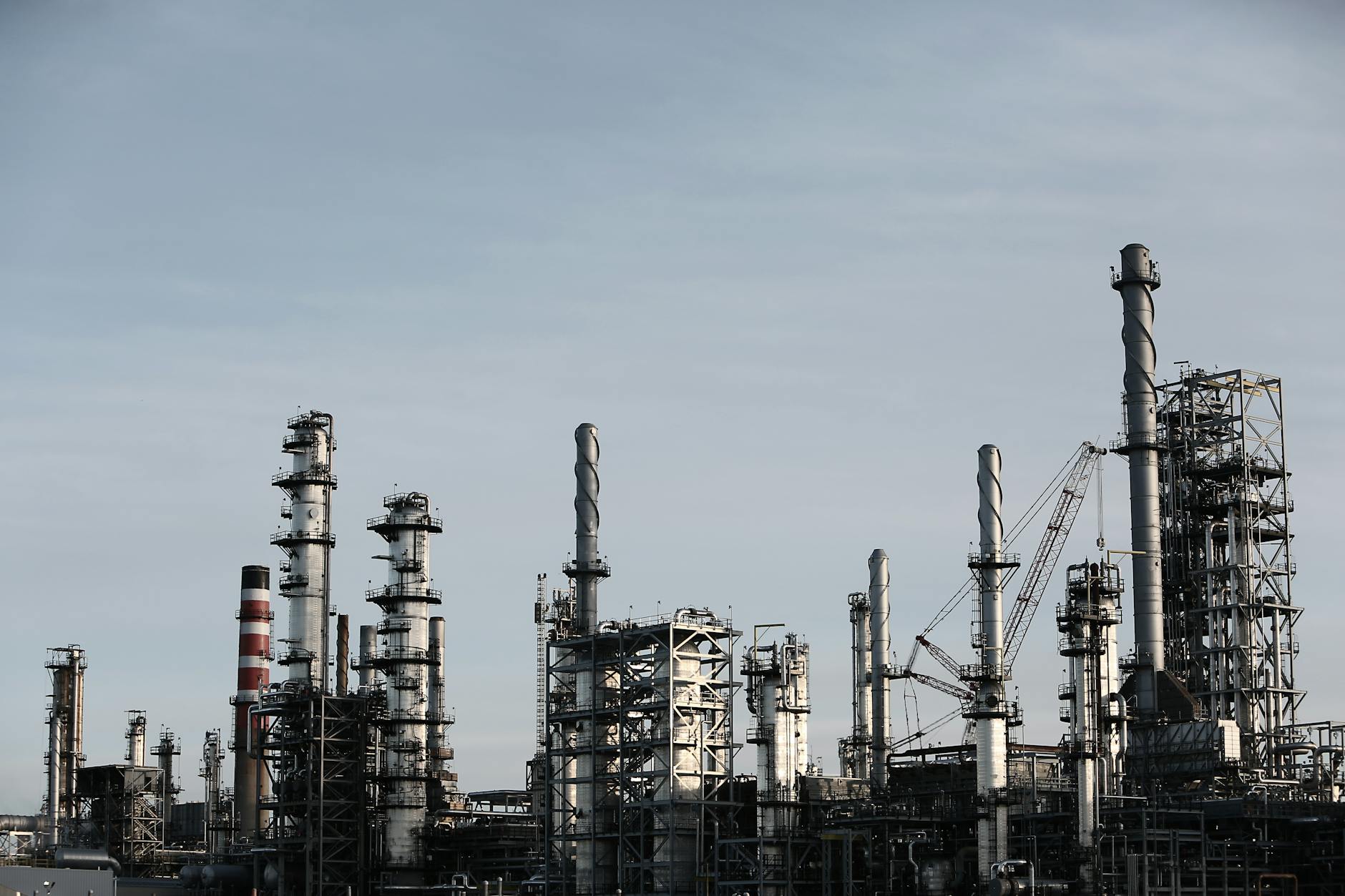
On 25 June 2024, the Court of Justice of the European Union (CJEU) delivered its landmark judgment on the Taranto former Ilva steelworks (located in Southern Italy). In case C-626/22, the Grand Chamber strengthened the precautionary principle by requiring thorough health risk assessments, an integrated review of all major pollutants and a strict refusal of further deadline extensions. Most notably, the Court clarified that industrial operations must be suspended whenever they pose a serious threat to the environment or to human health. Despite this clear EU framework, the Italian saga remains unresolved, and the future of the plant, its workers and the surrounding territory is still highly uncertain.
- The Judicial Proceedings
The Ilva Case concerns the interpretation of EU rules aimed at combating atmospheric pollution from large industrial installations and fits, more specifically, into the judicial line linked to the sad saga of the former Ilva in Taranto, already defined by the United Nations as a sacrifice zone as well as a stain on the collective conscience of humanity, due to a steel center that “for decades has compromised people’s health and violated human rights by discharging enormous volumes of toxic atmospheric pollution”.
Moreover, the investments necessary for the remediation and conversion of the plants have not yet been realized despite the appointment of extraordinary commissioners, corporate transformations, and the countless “save Ilva” decrees issued by successive governments over time, and far from finding the right balance to make steel production coexist with the protection of collective health and environmental sustainability.
For this reason too, Decree-Law 5 January 2023, No. 2 “Urgent measures for plants of strategic national interest”, converted by Law 3 March 2023, No. 17, implemented the definitive transfer to public ownership of Ilva and the birth of Acciaierie d’Italia S.p.A.: an issue to be read, inevitably, in light of the renewed State intervention in the economy. Indeed, after the 2022 reform, the new Article 41(3) of the Italian Constitution now provides that “The law shall determine appropriate programmes and controls so that public and private economic activity may be directed and coordinated for social and environmental purposes”.
What is new is not the reference to legislative “programmes and controls” as such, which already existed in the pre-reform text, but the explicit limitation of the economic initiative where it damages health or the environment (in addition to safety, liberty and human dignity). This is particularly relevant for high-risk industrial activities, where the State is constitutionally required to intervene through regulation and oversight.
Furthermore, the provision does not merely allow legislative intervention: it requires the legislature to put in place programmes and controls capable of effectively steering economic activity. Inaction or purely formal regulation may therefore raise issues of constitutional adequacy. In this sense, Article 41(3) operates as a constitutional hinge between EU environmental obligations and national administrative action.
The Main Proceeding: The Collective Action of Citizens Against the Plant
This tormented judicial case originates from the collective injunctive action proposed by eleven citizens of Taranto (Association “Tarantini Parents”) to request the shutdown of the plants and compliance with the prescriptions contained in the integrated environmental authorization (hereinafter IEA).
Overall, the appeal intends to counter the multiple government measures that for over a decade (from the first criminal seizure to the adoption of special rules) have in fact allowed the largest steel center in Europe to continue its production activity, despite the devastating impact of Ilva on the population as well as the high risk of environmental crisis having been known for some time.
According to the applicants, these are therefore exceptional and emergency measures, taken in violation of Directive 2010/75/EU. Their demands aimed to obtain one of the following measures:
1. The closure of the “hot area” of the plant or the cessation of related activities;
2. Alternatively, the closure of the coking plants or the cessation of related activities;
3. As a further alternative, to stop the production activity of that hot area until the complete implementation of the prescriptions contained in the 2017 IEA.
In the background, the request to order, in any case, the preparation of an industrial plan that provides for the reduction of at least 50% of greenhouse gas emissions (compared to the production of 6 million tons of steel per year), or the adoption of measures suitable for eliminating or reducing the effects deriving from the ascertained violations.
The Preliminary Questions Submitted to the Court of Justice
The Specialized Section on enterprise matters of the Civil Court of Milan is therefore called upon to rule on a series of demands aimed at enjoining industrial activity. In analysing the national legislation on IEA, the referring judge realized that the health damage assessment (HDA), substantially, at present does not constitute a prerequisite for obtaining the release of the authorization for the operation of a plant; the same assessment, moreover, does not necessarily determine the review of the same IEA even when it has a clearly negative outcome. Given this, the Court thus identified a potential conflict between internal rules and Directive 2010/75/EU, interpreted in light of the precautionary principle.
To this crucial question were then added two other questions, always concerning the compatibility of national legislation with the directive, relating respectively to:
– The completeness of the analytical set to be taken into consideration for IEA purposes (beyond predictably relevant substances a priori, others actually detected should be included);
– The legitimacy of the multiple extensions provided at the level of national primary legislation for the actual compliance with measures to protect the environment and people’s health (which were not yet completed eleven years after the entry into force of this national legislation).
2. EU Legislation on Industrial Emissions
As for the reduction of industrial emissions, Union law still has its roots today in the approach outlined by the “IED directive”, which recast seven directives, including the directive on integrated pollution prevention and control (which had in turn codified the first IPPC directive) fourteen years ago.
Within it, in fact, there are a series of rules “intended to avoid or, where not possible, reduce emissions from [industrial activities] into air, water and soil and to prevent the production of waste, to achieve a high level of protection of the environment as a whole”, to be read increasingly in light of the principles enshrined in the Charter of Fundamental Rights of the European Union (CFREU). Essential for this purpose are especially:
– Article 35 (Protection of health) ;
– Article 37 (Environmental protection).
These are therefore indispensable provisions in the application of a directive that establishes the need to intervene primarily on the polluting source as well as the use of best available techniques (BAT) for defining authorization conditions, also guaranteeing citizens “access to justice to be able to contribute to safeguarding everyone’s right to live in an environment capable of ensuring their health and well-being”.
Italian Implementation and the “ad Ilvam” Extensions
In Italy, the IED directive was transposed by the Legislative Decree of 4 March 2014, No. 46 “Implementation of Directive 2010/75/EU on industrial emissions (integrated pollution prevention and control)”, through which substantial modifications were made to integrated environmental authorizations provided for by Part II, Title III-bis of Legislative Decree of 3 April 2006, No. 152 (Italian Environmental Code).
However, in the case of Ilva, these prescriptions led, paradoxically, to the granting of repeated and generous extensions for the implementation of the adaptation interventions imposed by the authorizations that have succeeded each other so far. Exception after exception, this gave rise to a real “special legislation” that, starting from July 2012, ensured the production continuity of the factory, despite the preventive seizure ordered by the Court of Taranto.
3. The Admissibility of the Request for a Preliminary Ruling
The Luxembourg Court first cleared the procedural path by declaring the preliminary ruling admissible, despite several exceptions raised by Acciaierie d’Italia and the Italian State. In rejecting these challenges (as has been done in Avio Lucos judgment), the Court reaffirmed that national legal hurdle – such as the alleged insufficiency of the case description or the preclusive effect of internal opinions (res judicata) – cannot prevent the Court of Justice from ensuring a correct and uniform interpretation of EU law.
Crucially, the Court dismissed the argument that it could not intervene in a dispute between private parties (see C-486/18). It ruled that when administrative organs are endowed with exceptional powers – as is the case for the Taranto steel center, defined as a “plant of strategic national interest” under a special derogatory regime – their actions are assimilated to those of the State.
This procedural clearance was a necessary prerequisite for the Court to address the substantive constitutional hinge: the requirement for the legislature to implement effective “programmes and controls” to steer economic activity when it threatens health or the environment.
4. The Principles Identified by the Court
On the First Question: Health Impact Assessment
The rules established by Directive 2010/75 constitute “the concretization of the Union’s obligations regarding environmental and human health protection” deriving from Article 191 TFEU and Articles 35 and Article 37 of the Charter of Fundamental Rights.
The first question asked the CJEU to clarify what relevance should be given to the health damage assessment when it has given results in terms of unacceptability of health risk for a significant population affected by polluting emissions.
Key Findings:
– Pollution phenomena that cause health damage are significant only when harmful effects must be considered excessively harmful to human health;
– The European Court of Human Rights has classified damage at the Taranto site as “violation of fundamental rights”;
– Member States must provide that health impact assessment constitutes an internal act in authorization procedures;
– The assessment cannot be ignored and must receive “necessary, effective and timely consideration”.
On the Second Question: Scope of Pollutants to Consider
The second question concerned whether it is sufficient to include only predictable pollutants “a priori” or whether all scientifically recognized harmful substances must be considered.
Court’s Ruling:
The Court adopted a “substantialist” approach in light of the precautionary principle:
– All harmful and polluting substances are relevant, even if not considered during the first authorization procedure;
– Authorization must prescribe limit values for all polluting substances that can be emitted in significant quantities;
– A global assessment of all polluting sources and their cumulative effect is required;
– The authority must consider experience resulting from actual plant management.
On the Third Question: Repeated Deadline Extensions
The third question concerned the compatibility with the directive of repeated extensions of deadlines for implementing environmental and health protection measures.
Court’s Clear Position:
– The directive does not contain any provision allowing Member States to grant extensions or delays;
– The deadline for compliance must ensure that installation operation is suspended “until compliance is restored”;
– This obligation does not admit exceptions or extensions, except in exceptional circumstances, which are not present in this case;
– Repeated extensions are incompatible with EU law when serious environmental and health dangers have been identified.
5. Concluding Observations
Given the importance and sensitivity of the issues addressed, this Grand Chamber judgment represents a singular and decisive development within the European courts’ evolving jurisprudence on climate and environmental litigation. While it builds upon established principles of EU environmental law, it also introduces several qualitative shifts that significantly recalibrate the balance between industrial activity, environmental protection, and human health.
Key Impact: A New Normative Link Between Environment and Health
The most innovative element of the ruling lies in the systematic and operational coupling of Articles 35 and 37 of the Charter of Fundamental Rights. For the first time, the Court treats these provisions not merely as complementary objectives, but as a combined normative yardstick capable of directly constraining industrial activity.
Unlike previous case law, where environmental protection often functioned as a contextual or programmatic consideration, the Court now affirms that serious and persistent risks to human health deriving from environmental degradation may justify the suspension of industrial operations as such. In this sense, the judgment goes beyond the traditional logic of environmental compliance and enters the terrain of fundamental rights–based limits to economic activity.
This marks a clear departure from earlier approaches that tolerated prolonged transitional regimes and repeated derogations in the name of employment protection or economic continuity. The Court effectively clarifies that no industrial interest can prevail where the combined protection of health and the environment is structurally compromised.
Methodological Implications: From Precaution to Integrated Health Risk Governance
From a methodological standpoint, the judgment significantly strengthens the precautionary principle, transforming it from a flexible regulatory guideline into a mandatory decision-making paradigm.
What is novel is not the invocation of precaution per se, but the Court’s insistence that it must “always, in any case and everywhere” translate into a preventive and comprehensive assessment of health impacts. This entails:
- An integrated risk analysis;
- Extended to all harmful emissions, including those not fully predictable or scientifically certain;
- Anapplied throughout the entire lifecycle of the industrial authorization, including renewals and extensions.
This approach decisively rejects fragmented or selective assessments and undermines administrative practices that isolate environmental parameters from public health data. It also implicitly challenges national authorities’ discretion in defining the scope and depth of impact assessments, thereby Europeanising risk evaluation methodologies.
The precautionary principle “will always, in any case and everywhere, translate into a preventive assessment of the impacts of industrial activity on human health” through an integrated risk analysis extended to all harmful industrial emissions.
Legislative Response: National Adaptation Under Judicial Constraint
The adoption of Decree-Law 24 January 2025, No. 3 “Urgent measures to ensure the continuity of production and employment at the former ILVA plants”, converted by Law 20 March 2025, No. 31, must be read as a defensive legislative response to the Court’s ruling, rather than as an autonomous policy choice.
The reform seeks to realign the Italian legal framework with EU requirements by:
- Assigning a central role to health damage assessments within Integrated Environmental Authorisation (IEA) review procedures;
- Strengthening monitoring and enforcement mechanisms;
- Introducing more stringent and binding deadlines for compliance with environmental and health prescriptions.
However, the effectiveness of this legislative response remains contingent upon its concrete administrative implementation. The judgment implicitly warns that formal compliance will not suffice if structural deficiencies persist in risk assessment, enforcement, or political accountability.
Final Remarks: A Watershed Judgment, With Open Questions
This ruling undoubtedly constitutes a watershed moment in European environmental law, establishing several principles that will resonate far beyond the Ilva case:
- Environmental protection and human health are legally inseparable;
- Health impact assessments are a core component of industrial authorization procedures, not an ancillary tool;
- All harmful pollutants must be considered, including cumulative and uncertain risks;
- Repeated extensions of compliance deadlines are incompatible with EU law where serious dangers persist;
- Industrial activity must be suspended when it poses significant threats to health and the environment.
At the same time, the judgment raises constructive points of criticism and unresolved issues:
- The Court provides limited guidance on how national authorities should operationalise integrated health risk assessments, potentially generating implementation disparities across Member States.
- By strongly constraining administrative discretion, the ruling risks shifting complex techno-scientific evaluations into the judicial arena, raising questions about institutional competence and separation of powers.
- The implicit prioritisation of health and environmental protection leaves open how conflicts with social rights, such as employment protection, should be managed in practice.
Nevertheless, the Court has unequivocally “nailed Italian governments to their responsibilities” in the Ilva affair, offering a strict interpretation whose consequences will be felt across the EU. With approximately 52,000 highly polluting installations potentially affected, this judgment signals a transition from environmental law as regulation to environmental law as constitutional constraint.
—
Ilaria Baisi is a EPLO-ELGS Mst Researcher and an Adjunct Professor of Administrative Law at UnitelmaSapienza University of Rome. She holds a PhD in Public and Environmental Law from the University of Florence. Her work lies at the intersection of Administrative Law, European Union Law and environmental protection, with a specific focus on the regulation of energy markets and organisational sustainability. Ilaria has published extensively on Green Public Procurement (GPP), circular economy and decarbonisation. She has also conducted advanced research at the Maastricht Centre for European Law (MCEL) and Jean Moulin Lyon III University.