
Introduction
This post examines how conceptual, procedural, and epistemic features of EU chemicals regulation interact with circular-economy objectives, producing legal counterforces that weaken the environmental outcomes aimed for in the TFEU, that Union policy on the environment shall aim at a high level of protection and shall be based on the precautionary principle. Plastics recycling in Sweden is used as an example to highlight the difficulty of managing chemical risks in the pursuit of chemical safety as well as other goals.
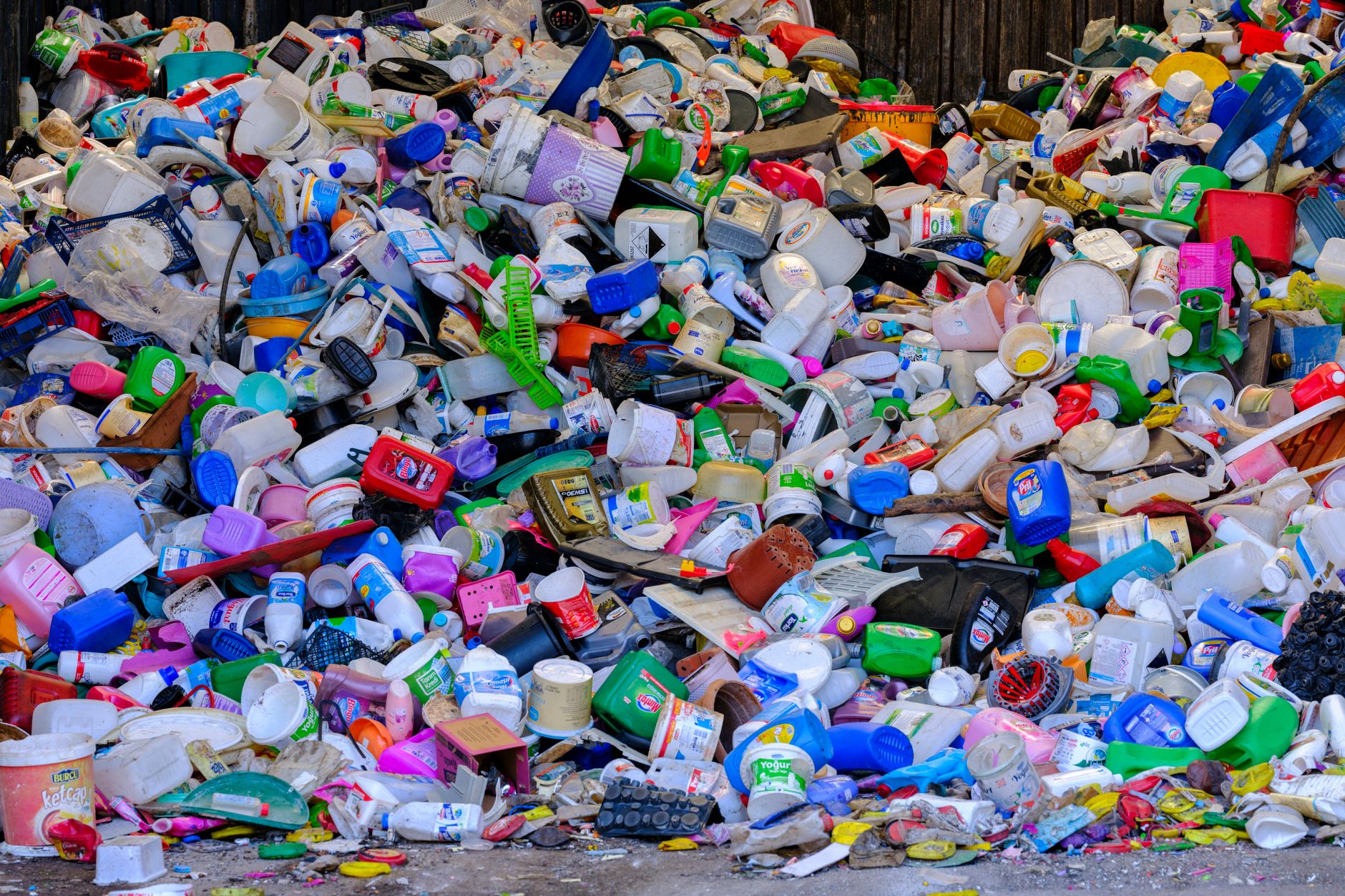
The realization of a circular economy is a necessary transformation if we are to meet the environmental and climate challenges – meaning that products are reused, repaired, remanufactured or recycled, to maintain their value for as long as possible and minimize waste. Increased plastic recycling, for instance, is an important part of a circular plastics economy as it can help reducing dependency on extraction of fossil fuels for plastics production, as well as CO2 emissions – most of the value of, e.g., plastic packaging is lost when it goes to incineration or landfill after only a very short first-use cycle. The presence of hazardous chemicals, however, decreases the demand for recycled materials, acts as a barrier for achieving higher recycling rates, and results in difficulties with balancing the increased recycling of material with the environmental and health protection goals. The EU has stated that substances of concern in recycled materials need to be minimized and that this will require, among other things, the development of methodologies for chemical risk assessment. Ignorance of the content of materials calls for the precautionary principle when it comes to recycling materials in a non-toxic circular economy – a principle that appears in several parts of the EU legislation.
Risk management approaches within EU law
Within the TFEU, the precautionary principle is anchored in Article 191(2) as a foundational element of EU environmental policy. The Court of Justice of the European Union has consistently interpreted this provision as authorising regulatory action in situations of scientific uncertainty, thereby lowering the evidentiary threshold for intervention. In early case law the General Court confirmed that EU institutions may adopt protective measures without having to wait until the reality and seriousness of risks become fully apparent (eg, case T-13/99, case T-70/99). According to the court it follows from the precautionary principle that a preventive measure may be taken only where the risk, although its existence and extent have not been “fully” demonstrated by conclusive scientific evidence, nevertheless appears to be sufficiently substantiated based on the scientific data available at the time the measure is adopted (case T-70/99). As such the precautionary principle may be regarded as a general principle of EU law and, as such, considered an autonomous principle.
The REACH Regulation gives concrete regulatory expression to the precautionary principle by structuring the management of chemical risks around uncertainty, data gaps, and shifting burdens of proof. Recital 9 explicitly refers to the principle, while core mechanisms – registration (Articles 5–7), evaluation (Articles 40–48), authorisation (Articles 55–66), and restriction (Articles 67–73) – are designed to enable regulatory action in the absence of full scientific certainty. In particular, the “no data, no market” rule in Article 5, together with the information requirements in Articles 10 and 12–13, shifts the burden of proof to industry and embeds a precautionary logic at the level of evidence generation. REACH operationalises the precautionary principle through a regulatory architecture that privileges early intervention, extensive information generation, and a reallocation of evidentiary burdens, while at the same time granting EU institutions considerable discretion in the face of scientific uncertainty.
The Waste Framework Directive reflects the precautionary principle, as anchored in Article 191(2) TFEU, by structuring waste governance around preventive action, risk control, and the minimisation of adverse environmental and health impacts under conditions of uncertainty. Article 13 requires that waste management be carried out without endangering human health or harming the environment, establishing a broadly framed obligation that supports precautionary intervention even where risks are not fully quantified. This is reinforced by the waste hierarchy in Article 4, which prioritises prevention over reuse, recycling, and disposal, thereby embedding a forward-looking logic aimed at avoiding the generation and circulation of hazardous substances. More specifically, Articles 6 and 7, governing end-of-waste status and the classification of hazardous waste, require that materials may only exit the waste regime or be classified on the basis of criteria ensuring that no overall adverse environmental or human health impacts arise – reflecting a precautionary threshold in situations of scientific uncertainty, particularly concerning substance content and long-term effects. The Waste Framework Directive operationalises the precautionary principle through a regulatory structure that prioritises prevention, constrains the re-entry of potentially hazardous materials into economic circulation, and requires a high level of assurance before regulatory thresholds – such as end-of-waste status – are crossed.
The Ecodesign Directive operationalises the precautionary principle by embedding preventive, lifecycle-oriented requirements into the design phase of energy-related products, thereby addressing environmental risks before they materialise. Although the Directive does not explicitly refer to the precautionary principle, its legal architecture reflects the logic of Article 191(2) TFEU by requiring that environmental impacts be considered across the entire life cycle of products (Article 1 and Annex I), including resource use, emissions, and waste generation. The framework enables the adoption of implementing measures under Article 15, which may set requirements relating to material composition, durability, reparability, and the presence of hazardous substances, even where scientific uncertainty persists regarding long-term environmental or health effects. In this sense, ecodesign functions as a forward-looking regulatory instrument, aimed at preventing risks through upstream design constraints rather than downstream control.
Stretching over several regulations, there are two basic approaches to risk management used within EU chemicals legislation: one based on specific risk management, and the other a generic approach to risk management. While specific risk management means that an exposure assessment is performed on a case-by-case basis when each substance is risk assessed under a specific legal framework, the generic approach to risk management means that the potential exposures and risks are considered generically, prior to the adoption of legislation. In a specific risk management-based approach, consideration is given to how a substance is to be used in the individual case and thus the specific exposure, while in the generic approach to risk management, the hazardousness of a substance is in itself the basis for triggering pre-determined measures, such as packaging requirements, communication requirements, restrictions and prohibitions – no specific exposure to the substance is taken into account for such measures to be triggered. This approach is based on existing evidence demonstrating harmful effects for substances with similar hazardous properties, thereby reducing the need for substance-by-substance exposure assessments before regulatory measures are taken. Specific risk management may involve the establishment of so-called “positive lists”, which determine in advance which substances are permitted, or “negative lists”, which establish that certain substances are prohibited. The relationship between these approaches and the precautionary principle are discussed below.
Taken together, the precautionary principle is not a single, uniform standard but a context-dependent governance technique, shaped by institutional design, regulatory objectives, and evidentiary structures. This internal differentiation provides a critical point of departure for examining how the legal understanding of precaution – centred on manageability, proportionality, and institutional discretion – relates to, and potentially diverges from, philosophical accounts of uncertainty and natural scientific conceptions of risk and evidence.
Discussion: Risk management under uncertainty
The advantages and disadvantages of different methods of managing plastic waste, such as recycling or incineration, need to be weighed against each other, and different methods contribute to achieving different goals. Recycling is desirable for several reasons, such as reduced CO2 emissions, but there is often a lack of knowledge about whether the materials contain hazardous chemicals, such as flame retardants in plastics used in construction, automotive, aviation, furniture and electronics applications. Certain polymers (the fundamental building blocks of plastics), as well as additives in plastics can pose health risks and are therefore undesirable in new plastic products. This calls for the application of the precautionary principle, according to which, substances with unknown properties cannot be treated in the same manner as non-toxic substances. Incineration is relevant when plastic contains hazardous chemicals, but the other hand, it contributes to greenhouse gas emissions and thus counteracts the achievement of climate goals. This is the case in Sweden, where only 8 percent of Swedish plastic waste is recycled, and emissions from plastic incineration needs to be reduced for Sweden to be able to reach the goal of net-zero greenhouse gas emissions by 2045. Applying the precautionary principle on recycling may therefore be counterproductive to the achievement of climate goals, and a conflict of norms can easily arise between the application of the precautionary principle in relation to recycling, and the application of the same principle in relation to climate goals. This needs to be resolved in some way, for example through a prioritization. When the law is unclear, it becomes the risk manager’s task to make this prioritisation, but it is preferable to provide clear guidelines already at the legislative level. It can be argued that climate and environmental benefits pursued should not result in compromises regarding the protection of human health and the environment from hazardous chemicals.
Turning to the different approaches to risk management within EU chemicals legislation and applying them to recycling of materials, there is more to be desired in terms of precaution regarding some of the approaches. The method of creating a “positive list” of chemicals that are permitted to be included during recycling, based on the use of the substances and related specific exposure scenarios for humans and the environment, has good potential to be compatible with the precautionary principle. The same thing can, though, not be said if it is stated that materials containing some specific “negatively listed” chemicals cannot be recycled, from which it will follow that materials containing non-listed chemicals can. As non-listed chemicals that have unknown properties are permitted despite lack of knowledge about their effects, this method is not precautious in this respect. Similarly, following a generic approach to risk management, it can be decided for identified hazardous chemicals that materials containing them cannot be recycled (regardless of use and exposure scenarios), but what happens when a material that we want to recycle contains chemicals that have not yet been identified as hazardous, but are in fact hazardous? A clean material flow requires that these substances are not recycled either. To regard these as non-toxic and recycle them is not “good enough” in terms of precaution. There is a difference between the legal and the scientific context in terms of standards of proof, as standards of proof are generally strict within science. However, the legal context is not bound by such rigid standards of proof and by the demand of avoiding reaching false conclusions about, e.g., negative effects of chemicals, so-called type I errors (false positives). In the legal context, if the aim is to reduce risks to human health and the environment, it is more important to prioritize the avoidance of assuming that chemicals are non-toxic when they in fact are toxic, i.e., type II errors (false negatives), which can be done by basing risk management on the precautionary principle. A current case where the law has failed in this matter is the long-term use of PFAS chemicals in Sweden, where emissions of these chemicals have contaminated drinking water, which has been considered to cause people personal injury in the form av elevated levels of PFAS in their bodies.
Conclusions
The general lack of knowledge about the content of materials leads to difficulties in carrying out risk assessment and choosing regulatory risk management measures, as well as preventing contamination of recycled materials. The generic approach to risk management needs to be supplemented with other methods. Stronger operationalization of precaution, such as default hazard assumptions, could better align chemical safety with non-toxic circular economy goals and increase the desired outcomes of the legislation.
Posted by Caroline Gardelli (Associate Senior Lecturer in Law at Luleå University of Technology) and Henrik Josefsson (Senior Lecturer in Environmental Law and Associate Professor of Environmental Law at Uppsala University)
